
Electric Vehicles and the Case for Road Pricing
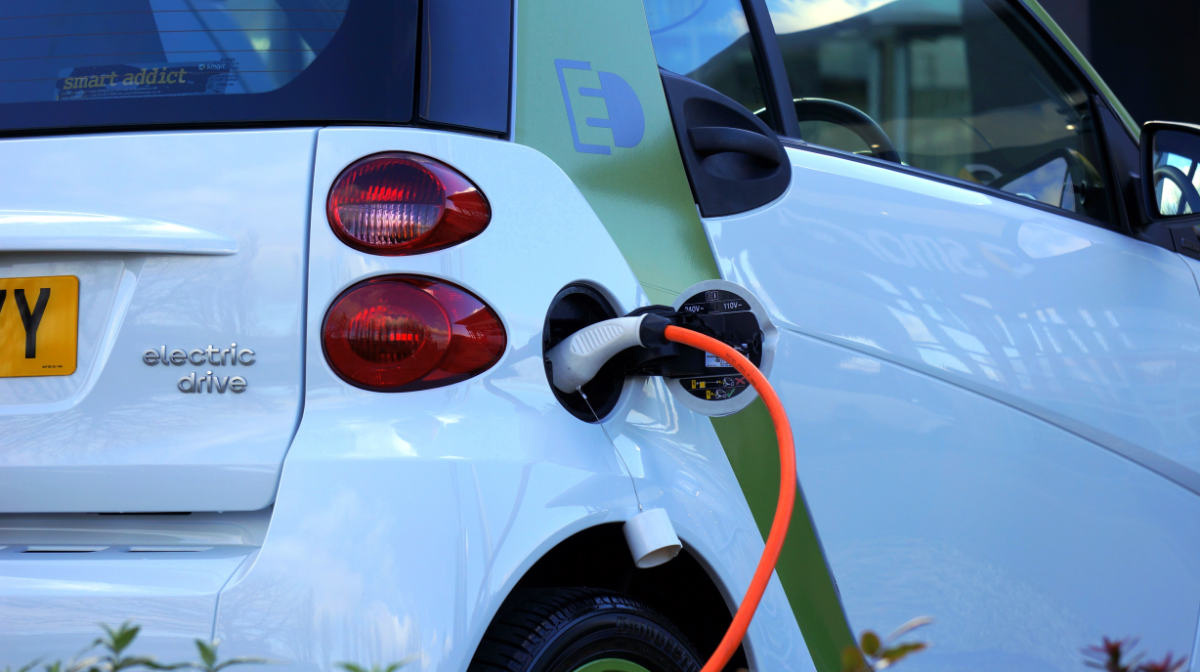
The Rise of Electric Vehicles Finally Makes Road Pricing a Possibility
Ministries of Finance in many governments around the world look at road users as cash cows – easy targets for raising taxes to fund various government expenditures. There are good reasons for this approach. Governments need to raise funds from somewhere in order to cover their expenditures, and road users are convenient tax ‘handles’: collecting various taxes from them is relatively easy and inexpensive. Their use of their vehicles is also relatively inelastic, so governments can impose quite high levels of taxation on the ownership and use of vehicles without their level of use (and hence the revenues raised) being significantly affected.
In many societies, those owning and using vehicles are also relatively affluent. It is often considered reasonable that they should therefore bear a larger burden of taxation than those who are too poor to own or use a vehicle. Finally, in many countries, relatively high taxation on vehicles is used to try and dissuade their use, for environmental and social reasons: using vehicle incurs ‘externalities’ that are not directly imposed on these users, but paid for by the wider society. Imposing higher taxes on this activity therefore helps to redress this balance. And finally, higher fuel prices also encourage greater vehicle fuel efficiency, with commensurate environmental benefits.
Road User Charges
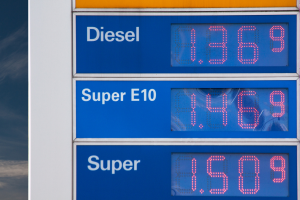
In recent decades, many countries have replaced taxes on road users, with various forms of charges instead. The main type of charge (commonly contributing around 80% of the total revenue raised) is a levy on the price of fuel. This aims to make the costs of vehicle use proportional to the distances travelled (and hence, the benefits enjoyed).
The details of such arrangements are different in each country, but as an approximate guide, the level of charge imposed on petrol (gasoline) should be in the order of around US$0.10 (10 US cents) per litre. Vehicle registration charges are the other main source of road user charge. This is designed to recover the cost of providing (and maintaining) the road services to users. These costs and hence the registration charges imposed, are therefore varied by vehicle type, with heavier vehicles (trucks) incurring progressively higher levels than lighter vehicles. When structured and managed well (which is often not the case), the revenues raised from these two sources of vehicle ownership and use can be significant.
The funds so raised are often used to cover the cost of maintenance (and sometimes part of the construction) of the road assets. This can be an important way of providing stable and predictable funding for these long-term activities, that is not affected by other, wider and unrelated government priorities, which tend to have much shorter time horizons than is needed for sound road asset management purposes. (The actions taken today can have an impact some decades into the future).
For an excellent, longer discussion about road user charges and road pricing, see here.
The Difference Between Taxes and Charges
Note that ministries of finance can (and do) still levy other taxes on road users, such as Value Added Tax (VAT) and Duty, with the revenues raised from these sources contributing to other, unrelated government expenditures (such as health, education and defence). These are taxes, as their expenditure is under the control of the government (through their ministry of finance). The level of these taxes also bear little or no relation to the cost of the services provided.
In contrast, revenues raised from road user charges are specifically directed towards the provision of the services they use, and vary based on the level and cost of their use. They are designed to be similar to the charges that utility companies might impose on electricity, water or mobile phone users. The amount charged varies depending on the level of use and the cost of providing these services; and the revenue goes directly towards those providing the services that that users enjoy. (In the case of road infrastructure services, this is usually managed at arm’s length from the finance ministry, often using a small road fund administration.)
As any road manager will attest, establishing a stable and predictable funding is an important factor in maximising the economic benefits of well-maintained and complete road infrastructure to the wider economy. This allows managers to focus on minimising the overall road transport costs over the whole life of the road assets.
Charges or Fees on road users are quite different from taxes:
| Tax | Charge or Fee |
| •Level unrelated to the cost of service provided. •Revenue raised not necessarily spent on the service provided. •Forms part of general government revenue. | •Level determined directly by the cost of service provided. •Revenue used to provide the service. •Revenue under the control of those providing the service & not by government. |
The Challenge from Electric Vehicles
Growing environmental concerns in recent years, increasingly reflected through government policies, are resulting in a growing shift from traditional motorised transport towards electric vehicles. This trend is likely to accelerate over the next 10 years, with some governments committed to phasing out the sale of all types of traditionally powered vehicles within the next 20 years. This forms an important part of attempts to decarbonise our economies, in order to reduce the impact on our environment.
However, in almost every country, this policy will also have a dramatic and adverse impact on the currently significant revenues currently being generated from taxes or charges on fuel use. If everyone moves over to using electrically powered vehicles (as intended), then without a change in how governments charge road users, the significant contribution from fuel taxes or charges will also evaporate. The substantial budgetary shortfalls resulting from this will need to be replaced somehow.
Road Pricing: A More Flexible and Fairer Solution
Road pricing offers a far more flexible and fairer approach to this conundrum than is possible using a fuel or vehicle registration charge (and certainly compared to general taxation). Under this approach, road users are charged directly for their use of the road network, with these charges being varied depending on the time of travel, location and also by vehicle type. Thus, prices can be increased when demand is especially high (e.g. in the morning or evening commuting times) or on particularly congested routes. Provided that the pricing mechanism is clear and transparent, it can therefore be used to mitigate and spread demand to quieter times and less congested parts of the road network.

This is using the pricing mechanism in the same way as used in many other free-markets: to balance the supply and demand, in this case the demand for limited road infrastructure. At the moment, whether through road user changes or taxation, the prices paid by road users to use the road network remains the same, regardless of where or when they travel. (A large proportion of the overall cost of vehicle ownership and use is fixed and do not vary, regardless of the distances travelled.)
This pricing mechanism is similar to the defunct approach adopted under the former Soviet system, where prices were set centrally, bearing little relationship to either the level of demand or the cost of providing these services. The results are the same as in this decrepit system: long delays (where prices are unable to mitigate demand or pay for greater supply) and a substantial level of wasted resources. (Much of the road infrastructure provided is designed to cater for peak demand: for 80% of the time, outside these peak times, much of this expensive infrastructure is underused.)
The Challenges to Introducing Road Pricing
The shift away from motorised vehicles to electric vehicles will place increasing pressure to radically reform the existing charging approach imposed on road users. Whilst this finally offers a good reason to move towards a fairer road pricing approach, this does (as for most other changes) also incur risks that need to be addressed.
Technical Challenges
Traditionally, the closest approach to road pricing was the use of Toll roads. These are however, expensive to operate (often incurring significant management costs and levels of loss). They can also incur significant delays to travellers, thereby reducing much of the benefits from providing the infrastructure.
Fortunately, modern technology means that vehicles can be charged automatically, with no need to physically stop vehicles. This will require every vehicle to have some unique identifier that can be read automatically, (whether this is some kind of in-vehicle transponder or automatic vehicle number plate recognition). This also needs to work for foreign-registered vehicles. However, these technical challenges have largely been solved and do not present significant problems.
Political Challenges
The main area of resistance to such a change will be political, especially concerns about privacy, fairness and the opportunity for governments to impose ever more charges on road users.
- Privacy: Most of us now carry a smartphone with us at all times, so this concern is already a fallacy: it is already possible for the authorities to monitor where we are and where we have been. Automatic numberplate recognition technology is also widely used in many societies, which also allows our movements to be tracked. Nevertheless, this concern could be alleviated through the use of say, anonymous pre-paid credit (similar to the prepaid cards for mobile phones).
- Fairness: as described above, road pricing is significantly fairer than the current approaches, but the onus must be on the proponents (and implementing authorities) to clearly explain why this is the case and the substantial benefits possible to society as a whole.
- Excessive charges: This also requires clear communications by the relevant government agencies, together with transparency as to how the funds raised are being used. It is helpful if the revenues raised from road pricing are not significantly different to those raised previously using more traditional methods.
Another political challenge will be transitioning to any new road pricing model: it is inevitable that there will losers and well as winners to any changes introduced. Road pricing is a much fairer method than most current approaches, but how any new system is introduced will influence how much political resistance there could be to it. The ‘road lobby’ is powerful and even the potential strength of this resistance has deterred political support for the change in the past. A phased approach will probably be required.
A Call for Change
The shift towards electrically powered vehicles offers a unique opportunity for roads to be better and more fairly funded, through the adoption of modern road pricing technology. The main challenges to overcome will be predominantly political, so the ground needs to be prepared now, before existing revenues from road users dry up and the new constituency of electric vehicle users becomes too used to their current low tax or subsidised existence.
What do you think about the issues raised in this article? Are there any other issues that you think need to be addressed? Are the conclusions reasonable? What other alternatives exist to this impending drop in revenues, which might work better and be fairer to all?